

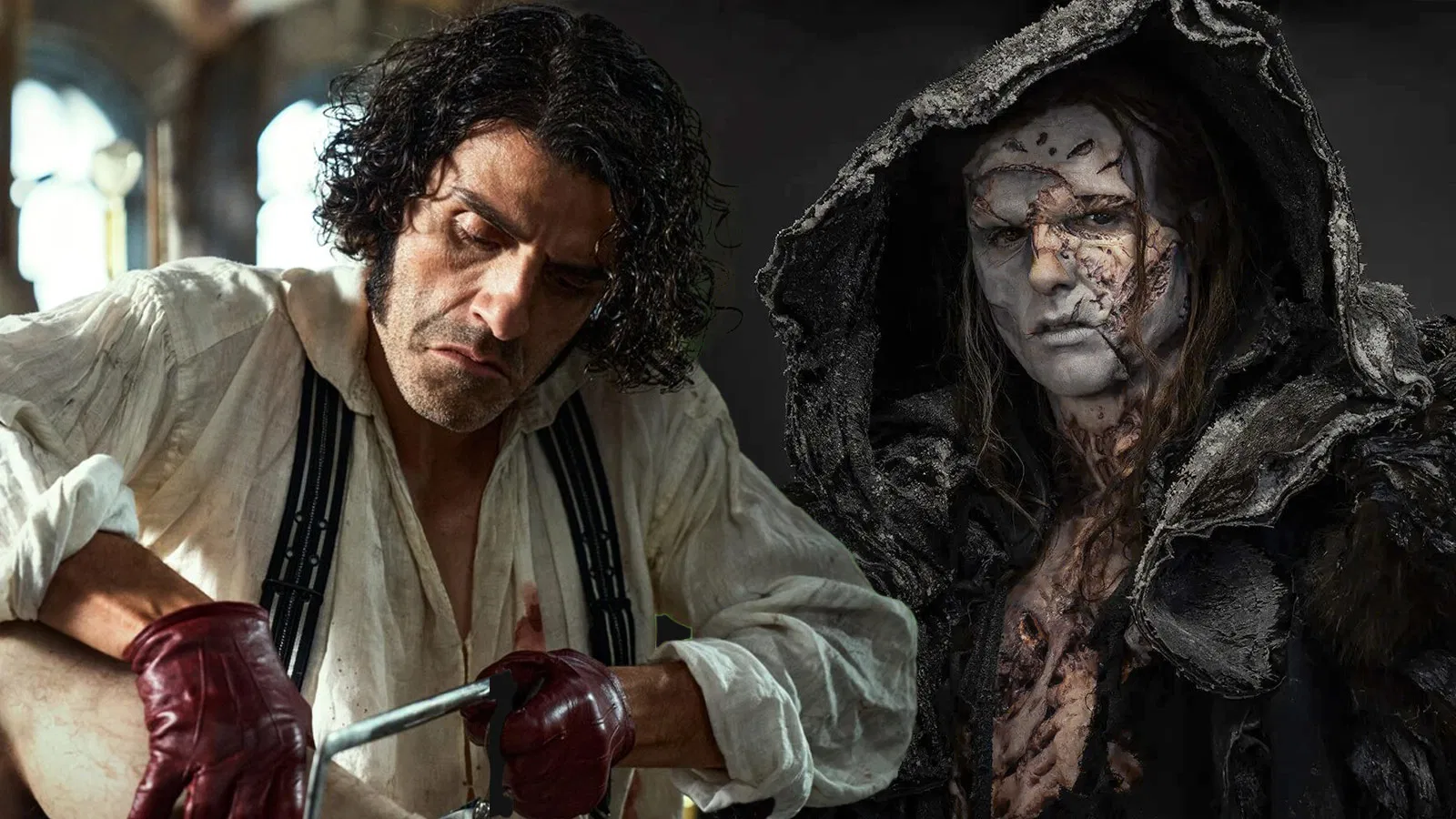
When Guillermo del Toro finally brought his long-cherished vision of Frankenstein to the screen in 2025, he didn’t simply remake Mary Shelley’s horror classic — he reimagined it as a gothic melodrama full of aching humanity. The result is one of the most emotionally vivid adaptations of Frankenstein yet: lush, haunting, and deeply sympathetic.
A Classic Tale, Reborn in the Victorian Age
Del Toro’s Frankenstein reveres its 19ᵗʰ-century roots, setting the story in 1857 — decades after Mary Shelley’s own era — but he doesn’t restrict himself to dust-coated cobwebs. As Roger Ebert notes, the film begins in the Arctic with a role-reversal chase: creator and creation hunting each other, then unfolds into a story bristling with philosophical, spiritual, and moral overtones.
Rather than a mere homage to early monster cinema, Del Toro builds something almost new — one that feels familiar but charged with fresh electricity.
Humanity, Not Just Horror
One of the most striking things critics agree on is how Frankenstein is less about jump scares and more about heartbreak. Jacob Elordi plays the Creature not as a mindless brute, but as an intelligent, literate, emotionally wounded being who contends with his sense of self, belonging, and rejection.
Ebert praises Elordi’s performance for its sensitivity and power: “he conveys … intelligence, sensitivity … a shot of him holding and petting a mouse is quietly wrecking — but he also puts across the power and rage beautifully.”
Oscar Isaac’s Victor Frankenstein, meanwhile, is driven by ambition, obsession, and a messianic belief that he can conquer death. But he’s not a cartoonish “mad scientist.” According to Ebert, Isaac balances empathy with mania — you understand Victor’s motivations, even when they cross dangerous lines.
Visual Poetry: Del Toro’s Signature Style
If there’s one director whose Frankenstein you could trust to be visually extraordinary, it’s Guillermo del Toro. The film is drenched in his trademark color palette: deep reds, blacks, intricate textures, and even symbolic motifs that evoke both religious iconography and gothic fantasy.
Peter Bradshaw of The Guardian highlights how the cinematography feels like “hi-tech stained glass or illustrated plates in a Victorian tome” — luxurious, meticulously detailed frames that elevate the film’s emotional weight.
Moral Questions and Modern Parallels
Del Toro isn’t just telling a monster story — he’s asking us to examine the cost of ambition, power, and creation. In this version, Victor is backed by a wealthy patron, played by Christoph Waltz, who funds this horrifying experiment. According to Latimes, this figure echoes the modern-day tech investors and venture capitalists obsessed with immortality — a chillingly relevant parallel.
Yet, as Del Toro himself has said, this isn’t an AI allegory. He’s less afraid of machines than he is of “natural stupidity,” of the human capacity to misuse power.
Critics’ Take: Triumphs and Tensions
- Strengths: Most critics praise the film for its emotional depth, the potency of Elordi’s performance, and its dedication to Shelley’s philosophical core.
- Visuals: The production design, costuming, and score (by Alexandre Desplat) are consistently lauded for their beauty and coherence.
- Criticisms: Some feel the pace drags, citing the movie’s grandiosity as a double-edged sword. The Guardian’s Bradshaw suggests that the opulent visuals sometimes overshadow the raw horror energy.
- Philosophical Weight: A few reviewers argue that while the film is emotionally rich, it doesn’t fully grapple with some of Frankenstein’s existential dread — but this may be a deliberate choice by Del Toro to emphasize relationship over terror.
Why Frankenstein (2025) Matters for Audiences
- For horror fans: It’s gothic, monstrous, and visually bold — but not just for cheap scares.
- For lovers of literary adaptations: Del Toro respects Shelley’s themes while reinterpreting them in a fresh, emotionally compelling way.
- For modern viewers: The story resonates with debates around science, power, and morality — making the monster’s suffering deeply relatable.
Guillermo del Toro’s Frankenstein isn’t just another retelling — it’s a resurrection of Mary Shelley’s questions for our age. With stunning visuals, powerhouse performances, and a tender heart at its core, it challenges us to consider who the real monster is: the one who is made, or the one who makes.
Rating: ★★★★☆
Why watch? For a Frankenstein that’s as poetic as it is horrifying, and as emotionally profound as it is visually spectacular.

nice